
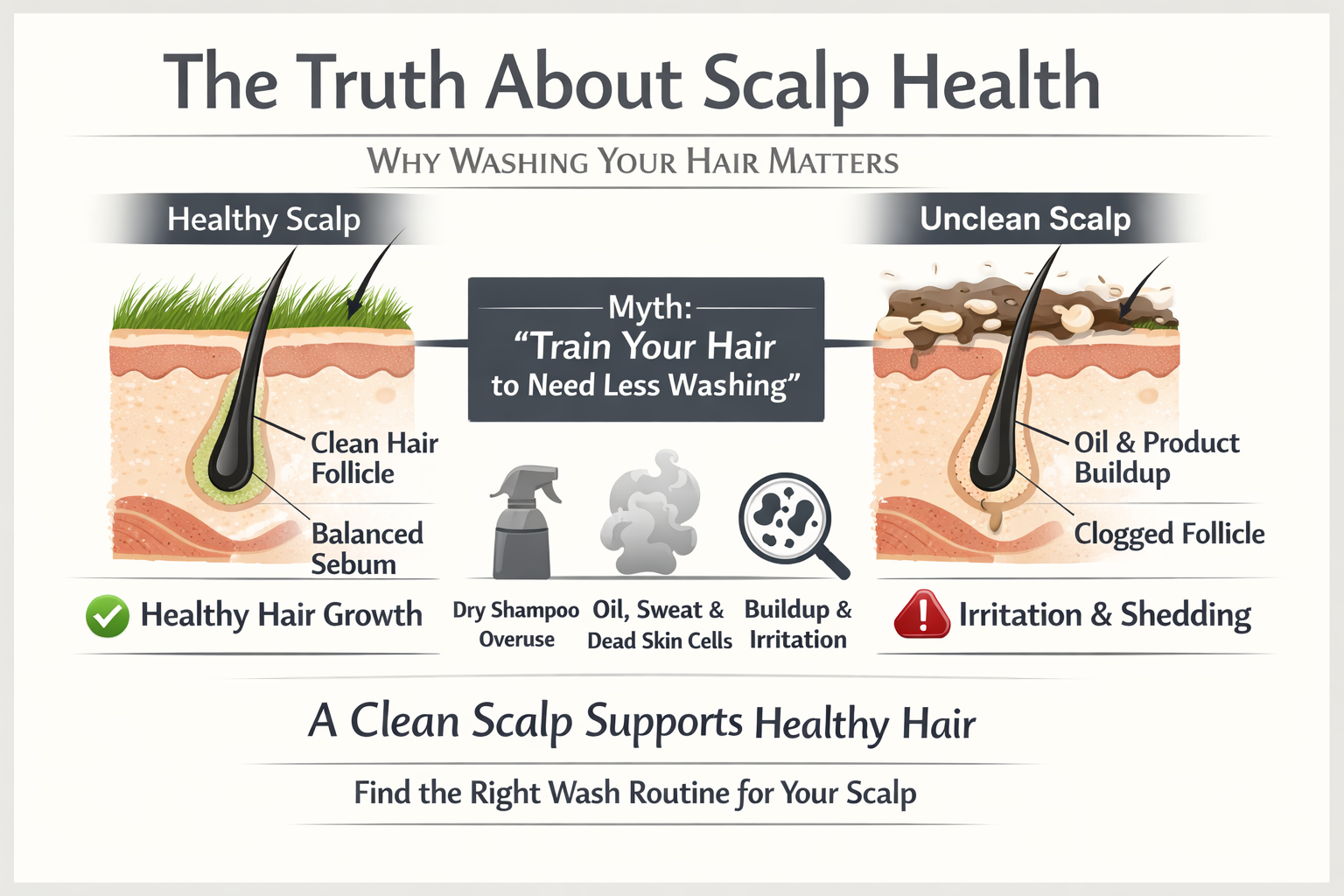
Many beauty trends claim you can “train” your hair to need less washing, but scalp biology tells a different story. Oil production is controlled by hormones and genetics—not by how often you shampoo. This article explains what actually builds up on the scalp, why overusing dry shampoo can cause problems, and how proper cleansing supports healthy hair growth.
Can You Train Your Hair to Need Less Washing?
The Truth About Scalp Health
For the past several years, a popular trend has been circulating through social media and beauty blogs: wash your hair less.
Many people have heard phrases like:
1. Train your hair to need less washing
2. Only wash your hair once a week
3. Dry shampoo is just as good as washing
While the idea may sound convenient, the science behind the scalp tells a different story.
After more than 30 years working in the salon industry, many stylists are noticing something concerning. We are seeing more scalp buildup, irritation, inflammation, and excessive shedding than we did years ago. One of the biggest shifts in hair care habits has been how infrequently people are cleansing their scalp.
Let’s talk about why scalp health matters and what the research actually says.
Oil Glands Are Not Trainable
One of the biggest myths in modern hair care is the idea that you can “train” your scalp to produce less oil.
Sebum, the oil produced by the scalp, is created by sebaceous glands that are controlled primarily by hormones and genetics. These glands continuously produce oil regardless of how often you wash your hair.
Washing less does not teach your scalp to produce less oil. Instead, many people simply become accustomed to the feeling of oilier hair over time.
What Actually Builds Up on the Scalp
Your scalp is living skin. Just like the skin on your face, it produces oil, sweat, and sheds dead skin cells every day.
When the scalp is not cleansed regularly, a combination of things can accumulate:
1. Sebum (natural oil)
2. Sweat
3. Dead skin cells
4. Environmental pollutants
5. Styling product residue
6. Dry shampoo powders
7. Bacteria and yeast that naturally live on the scalp
When these layers build up over time, they can irritate the scalp and create an unhealthy environment for hair follicles.
Dermatologists often compare the scalp to facial skin. Most people would never go a full week without washing their face, yet many people now believe it is healthier to leave their scalp uncleansed for extended periods of time.
The Dry Shampoo Lifestyle
Dry shampoo was originally designed to be a temporary solution — a quick refresh between washes when needed.
However, many people now rely on it as a regular replacement for shampooing.
When dry shampoo is used repeatedly without cleansing the scalp, powders and starches can build up around the follicles. Dermatologists have reported that excessive dry shampoo use can contribute to scalp irritation, follicle blockage, and even contact dermatitis in some individuals.
Used occasionally, dry shampoo can be helpful. Used as a lifestyle replacement for cleansing, it can create problems
Why a Clean Scalp Matters
Hair grows from follicles in the scalp. When the scalp is clean and balanced, follicles can function normally.
When buildup accumulates, it can lead to:
1. itching and irritation
2. dandruff or flaking
3. follicle inflammation
4. product buildup
5. scalp imbalance
A healthy scalp creates the best possible environment for healthy hair growth.
There Is No One-Size-Fits-All Washing Schedule
The truth is that every scalp is different. Some people naturally produce more oil, while others have drier scalps.
Dermatologists generally recommend adjusting washing frequency based on scalp type.
Oily scalps may benefit from washing daily or every other day.
Normal scalps often do well washing two to four times per week.
Dry or very curly hair types may wash less frequently but still need thorough scalp cleansing when they do.
The goal is not to follow a trend. The goal is to keep the scalp clean and balanced.
Back to the Basics of Scalp Health
Hair care trends will continue to come and go, but the fundamentals remain the same.
A clean scalp supports healthy follicles. Healthy follicles support healthy hair.
Dry shampoo can be a helpful tool, but it should never replace proper cleansing.
If you want healthy hair, start with the foundation — your scalp.
Clean scalp = healthy hair.
These are the thoughts of SalonTraining.com based on industry observations and available research. We always encourage beauty professionals and consumers alike to do their own research and continue learning about topics like this.