
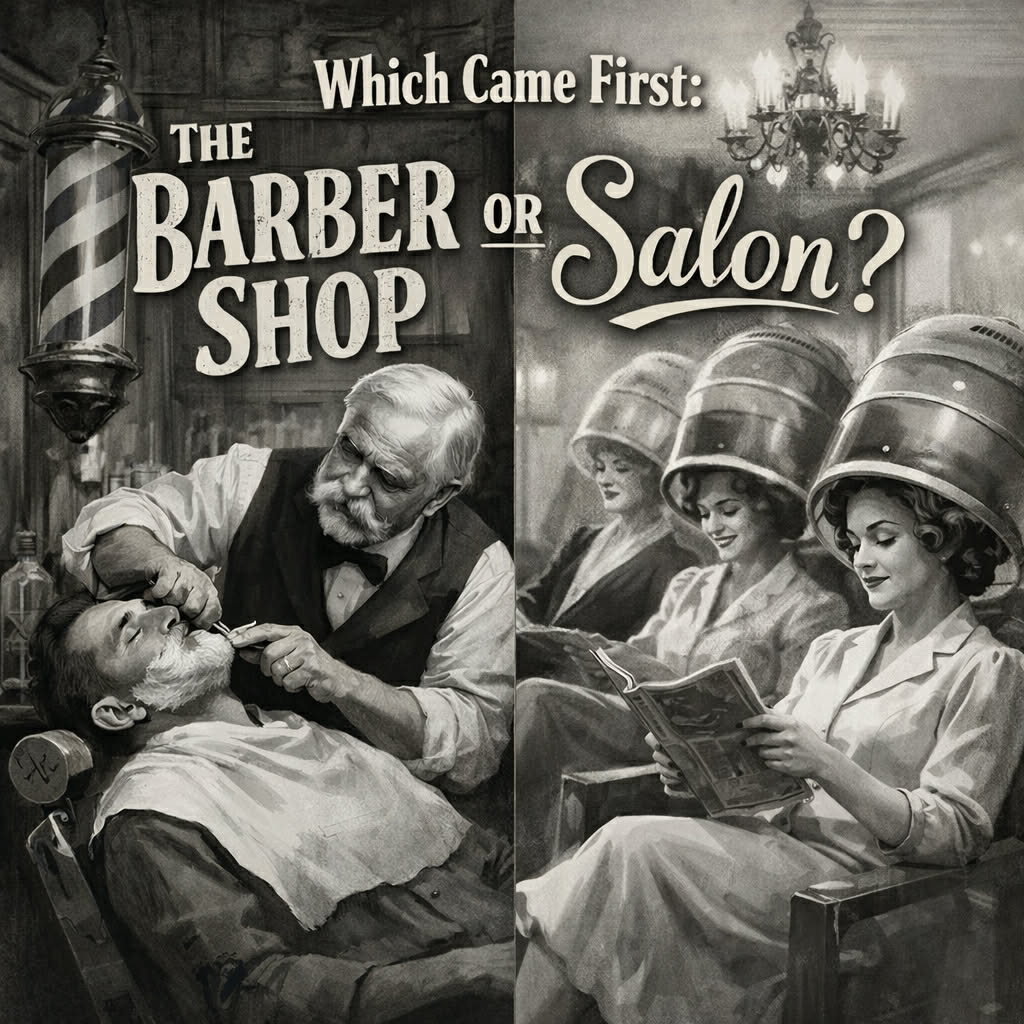
The beauty industry has been shaping culture, style, and personal confidence for thousands of years. But one question many professionals — and even clients — often ask is: What came first — the barber shop or the salon? The answer takes us back thousands of years to the earliest civilizations, where grooming wasn’t just about appearance. It was connected to health, social status, and even religion. Let’s take a look at how the modern beauty industry evolved.
The First Grooming Professionals: Barbers
Long before modern salons existed, barbers were the first recognized grooming professionals.
Historical records show that barbering dates back to around 5000 BC in ancient Egypt. Archaeologists discovered razors made from sharpened flint and seashells used for shaving.
In many early cultures, barbers performed services such as:
• Shaving beards and heads
• Cutting hair
• Minor surgical procedures
• Bloodletting
• Dental extractions
Because of this, barbers were often known as barber-surgeons.
During the Middle Ages in Europe, barber-surgeons performed surgeries, treated wounds, and handled many medical procedures.
The barber pole comes from this time — the red and white stripes represent blood and bandages from the medical work barbers once performed.
So historically speaking, barber shops came first.
When Did Hair Salons Begin?
The modern hair salon as we know it today began much later.
Professional beauty salons started becoming popular in the late 1800s and early 1900s.
One of the most influential figures in salon history was Martha Matilda Harper.
In 1888, she opened one of the first modern salons in Rochester, New York.
Her salon concept included:
• Comfortable reclining shampoo chairs
• Professional scalp treatments
• Hair care education
• Clean salon environments
She also created one of the first salon franchise systems, eventually opening 500+ Harper Method salons across North America and Europe.
Her approach helped transform beauty services into the professional industry we know today.
The Evolution of the Modern Salon
By the early 1900s, salons expanded their services beyond haircuts.
Professional beauty establishments began offering:
• Hair coloring
• Permanent waving
• Skin treatments
• Makeup services
• Nail services
Today the industry includes specialties such as:
• Advanced color techniques
• Hair extensions
• Medical aesthetics
• Lash and brow services
• Nail artistry
• Scalp health treatments
What began with simple grooming tools evolved into a multi-billion dollar global industry.
Why the Beauty Industry Continues to Grow
Although barbering started thousands of years ago and salons followed later, one thing has remained constant:
People value looking and feeling their best.
Salons and barber shops have become places where:
• Confidence is restored
• Relationships are built
• Creativity thrives
Many clients stay loyal to their stylist or barber for years, creating long-lasting trust.
That relationship is one reason the beauty industry continues to grow generation after generation.
Final Thoughts
The beauty industry traces its roots back thousands of years.
What started with basic grooming tools eventually evolved into the barber shops and salons we know today.
These spaces are more than places for haircuts — they are places where people connect, relax, and leave feeling more confident.
Whether someone sits in a barber’s chair or a stylist’s chair, the experience has always been about craftsmanship, trust, and personal connection.
FAQ:
Frequently Asked Questions About Barber Shops and Salons
Did barber shops or salons come first?
Barber shops came first. Historical records show barbering dates back to around 5000 BC in ancient Egypt.
Who started the first hair salon?
One of the first modern hair salons was opened by Martha Matilda Harper in 1888 in Rochester, New York.
What did early barbers do besides cut hair?
Early barbers performed minor surgeries, bloodletting, and dental work in addition to hair cutting.
Why is the barber pole red and white?
The red and white stripes represent blood and bandages from the time when barbers also performed medical services.